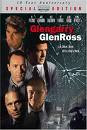
 Glengarry Glenross
—a film based on a play by David Mamet, one that won the Pulitzer Prize—tells the story of real estate salesmen and the boss who supervises them at Premiere Properties. Times have grown hard; properties are not selling. Employers blame their salesclerks; the clerks blame their leads.
To fix the problem, management has introduced two new business initiatives. First, they have purchased a new set of leads from Glengarry Glenross properties. However, before they put these "good leads" into the hands of their sales team, they want some signs of assurance. For this reason, their second step is to launch a sales contest: the winner will get a Cadillac, the runner-up will get a set of cheap steak knives, and the others will get the axe. The problem for these salesmen, aside from the prospect of placing third, is that the contest requires them to use the old Rancho Rio leads. The duress that follows turns them into cornered rats.
This film portrays men who feel no need to, as Wendell Berry advises, "stand by words." In their world, everything is permitted in the name of closing a sale, and these creatures take full advantage of such leniency. They lie to customers, and in ways that sound familiar. "Our computer has chosen you of all the customers who have requested information about our properties." Or: "I'm here overnight and have to go home tomorrow. But Danny, I know you're serious, and because of that I'm going to shove my appointments around." Trying to pressure customers into quick decisions on bad products, they also cheat their clients. Indeed, there is no hero to admire here.
In spite of this lack,
Glengarry still has many serious virtues. For one thing, its cast amounts to one of the best ever assembled; it includes Al Pacino, Jack Lemmon, Ed Harris, Kevin Spacey, Alan Arkin, Jonathan Price, and Alec Baldwin. Their performances, and in particular their ability to handle dialogue—especially dialogue at this level, where a single sentences demands a range of emotions—confirm, and in some cases even further, the legendary talents of these actors. By furthering I am thinking specifically of Jack Lemmon, who plays Shelley "The Machine" Levene. Roger Ebert has called his character as memorable as Willy Loman from
Death of a Salesman, and rightly so. While each salesman in
Glengarry has the capacity to shift from "chatting with the guys" to "working a client," no one executes this switch with more ease and sliminess than Lemmon. His voice alone has been museumed in my ear.
And then there is this dialogue, which is a virtue in itself. There is a repetitiveness to it, one that reinforces the catch-22 in which these men find themselves. Dave Moss, for example, who is played by Ed Harris, cannot break free from the leads. He simply goes on and on like this: "He's got the leads, he's got the good leads…We've got to go to them to get the leads…It's the leads, the whole thing is the leads."
At the end of the movie, topics discussed at the beginning return to conversation, turning this repetition into circularity. The effect brings hell to earth, an effect Mamet aims to achieve. As each character cusses the other into isolation, the irony is that all of them are just as deceived as their customers. The elusive promise of prosperity—it's in the titles given to their properties. Glengarry Glenross. Rancho Rio. Exoticness: tucked within the alliteration of these labels, it's the very vapor for which salesman and customer give away their lives.
Given the cause of the current economic crisis, this movie-play from the early '90s still has a pertinent warning to offer. We may think we're different than these money-grubbing salesmen, but we're just as vulnerable to the deceptive allure of prosperity.


